

Gentle, Deeply Calming Brain Training for Sensitive Nervous Systems
Infra-Low Frequency Neurofeedback is one of the most advanced forms of neurofeedback available today. Developed by Sue and Siegfried Othmer at the EEG Institute in California, this approach is backed by over 25 years of clinical research and practice.
Unlike traditional neurofeedback, ILF targets extremely slow brainwave activity—frequencies below 0.1 hertz. These ultra slow waves influence the body’s core survival responses, including fight, flight, or freeze. When these responses are stuck in overdrive—often due to trauma, chronic stress, or developmental issues—they can lead to anxiety, emotional overwhelm, sleep issues, or shutdown
Why ILF Works So Well
The Othmers discovered that when people trained using these very low frequencies, the brain responded more effectively and made faster, more lasting improvements. This was especially true for individuals with highly sensitive nervous systems or those with a history of developmental trauma, who often find traditional treatments too activating.

What a Session Looks Like
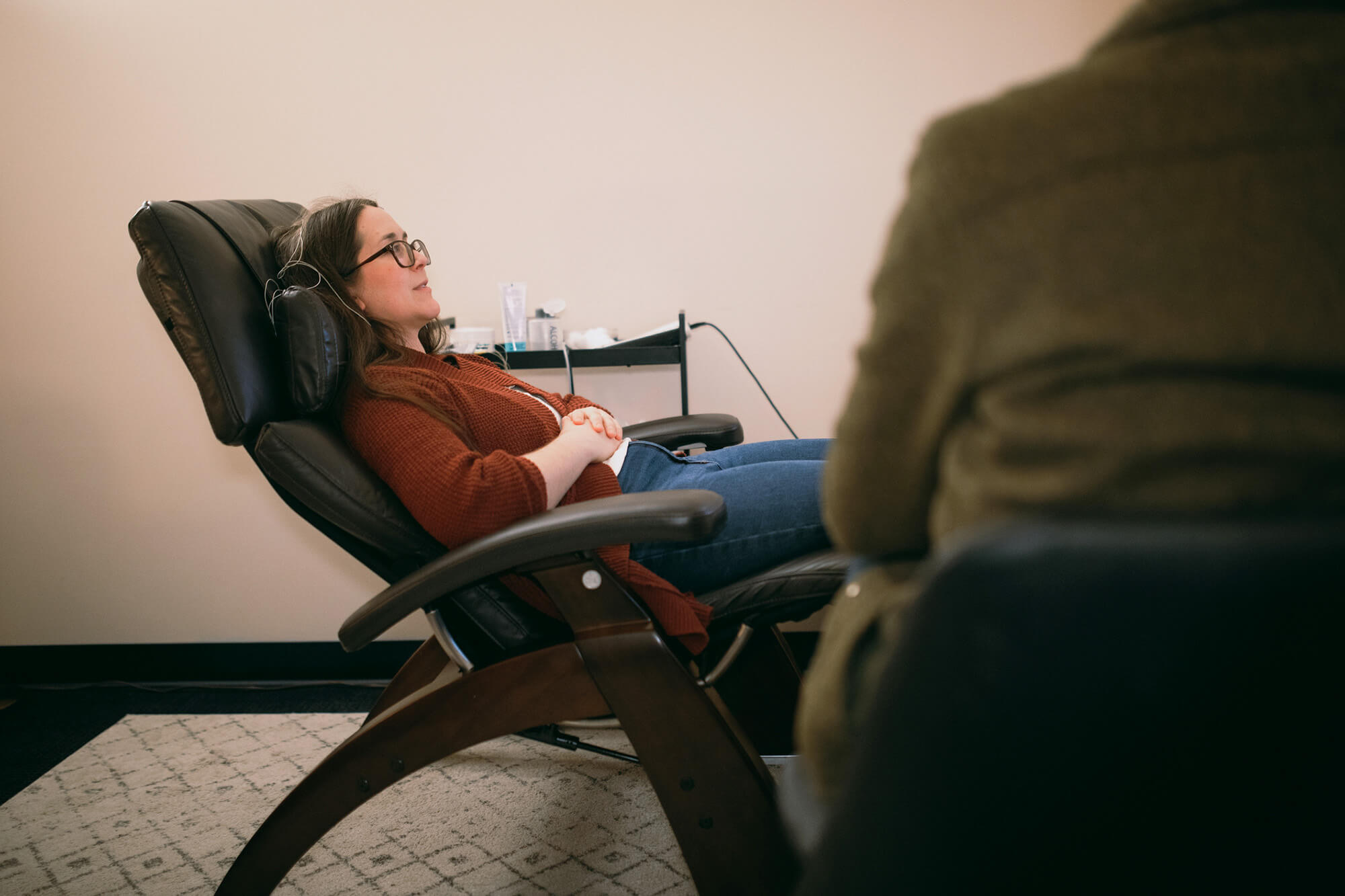
During a session:
- EEG sensors are gently placed on specific points of your scalp
- These sensors monitor your brain’s activity and send that information to a computer system.
- In real time, the software translates that activity into visual, sound, or tactile feedback—something your brain can “watch” and learn from.
- You just sit back and observe. There’s no need to concentrate or try to change anything.
As your brain sees its own activity reflected back, it begins to reorganize and self-correct. Over time, it lets go of inefficient or dysregulated patterns—like those causing anxiety, fogginess, or emotional reactivity—and shifts toward a more stable, calm, and focused state.
The Brain Knows What to Do
Unlike older methods that try to “train” the brain to hit certain targets, ILF neurofeedback trusts the brain’s natural ability to heal. The brain doesn’t need to be told what to do—it just needs a mirror to see itself clearly. That’s what this feedback provides.
This makes ILF a holistic, non-invasive method of brain training. It works with your system—not against it—by awakening the brain’s inner blueprint for self-regulation and healing.
The Therapist’s Role
Your neurofeedback therapist will:
Help discover your ideal training frequency—the range where your brain feels calm, focused, and balanced
Choose the correct sensor placements
Track changes in your symptoms week to week
We don’t rely on brain maps (QEEG assessments) for ILF, because we’ve found that your lived experience—your symptom changes—are the most accurate guide. Over time, we rotate sensor placements to train all regions of the brain, making expensive brain mapping unnecessary.
How Often Should I Train?
Sessions last 30 – 45 minutes
Attend once or twice a week for best results
A minimum of 20 sessions is recommended to experience long-lasting change
Many clients notice subtle improvements within the first few sessions, and results often build steadily over time. The brain continues to integrate these shifts between sessions—and sometimes even after the training ends.
Explore the Research
Infra-Low Frequency for Optimum Performance – Othmer
ILF Neurofeedback for PTSD – Peer-Reviewed Study